Daftar Isi PMBOK 8
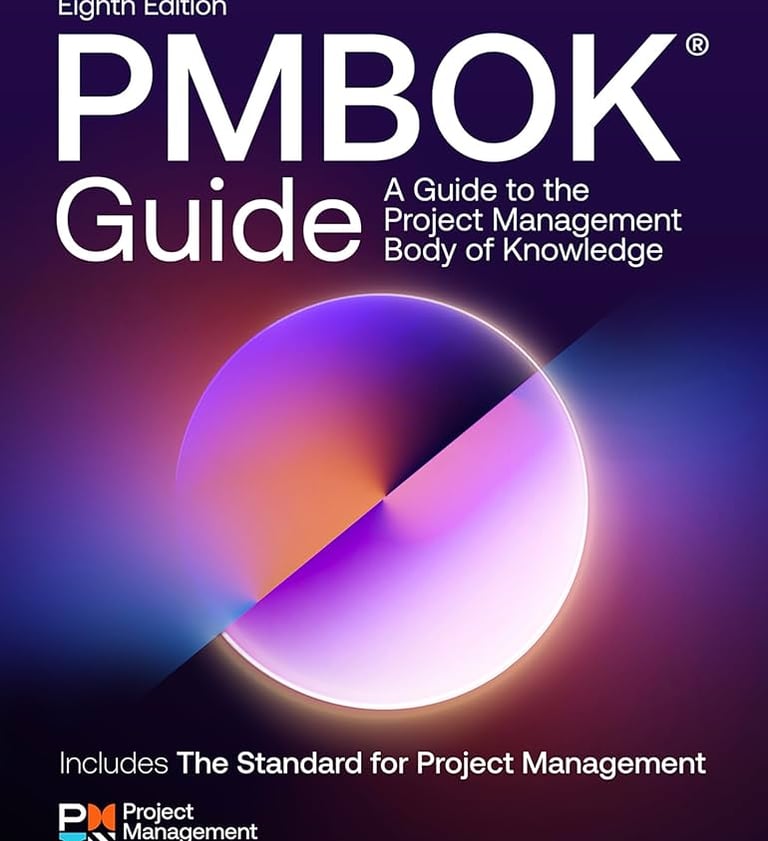
PMI sudah menerbitkan daftar isi PMBOK 8 beserta cover nya. Mari kita simak
10/27/20254 min read
The Standard for Project Management
#### Preface
- Evidence-Based and Globally Represented
- Summary of Changes
- Update of Key Terms and Concepts
- Refined Principles
- Reintroducing Process Groups as Focus Areas
- Updated Performance Domains
#### 1 Introduction
- 1.1 Purpose of The Standard for Project Management
- 1.2 Key Terms and Concepts
- 1.3 Foundational Elements of Project Management
- 1.3.1 Characteristics of a Project
- 1.3.2 Connecting Organizational Governance and Project Governance
- 1.3.3 Operations and Project Management
- 1.3.4 Relationship of Portfolio, Program, Project, and Operations Management
#### 2 A System for Value Delivery
- 2.1 Creating Value
- 2.1.1 Value Delivery Components
- 2.1.2 Assessing Project Success
- 2.2 Project Environment
- 2.2.1 Enterprise Environmental Factors
- 2.2.2 Organizational Process Assets
- 2.2.3 Policies, Processes, and Procedures
- 2.2.4 Organizational Knowledge Repositories
- 2.2.5 Organizational Structures
- 2.3 Product Management Considerations
- 2.4 Functions Associated With Projects
- 2.4.1 Provide Oversight and Coordination
- 2.4.2 Solicit and Manage Feedback
- 2.4.3 Facilitate and Support
- 2.4.4 Perform Work
- 2.4.5 Apply Expertise
- 2.4.6 Provide Organizational Direction and Insight
- 2.4.7 Provide Resources
- 2.5 Project Management Roles
- 2.5.1 Project Management Team
- 2.5.2 Sponsor, Customer, or Product Owner
- 2.5.3 Project Team
- 2.5.4 End Users and Other Key Stakeholders
#### 3 Project Management Principles
- 3.1 The Project Management Mindset
- 3.2 Principles and Performance Domains
- 3.3 Adopt a Holistic View
- 3.3.1 Project Impact
- 3.3.2 Principle in Action
- 3.3.3 Connected Performance Domains
- 3.4 Focus on Value
- 3.4.1 Project Impact
- 3.4.2 Principle in Action
- 3.4.3 Connected Performance Domains
- 3.5 Embed Quality Into Processes and Deliverables
- 3.5.1 Project Impact
- 3.5.2 Principle in Action
- 3.5.3 Connected Performance Domains
- 3.6 Be an Accountable Leader
- 3.6.1 Project Impact
- 3.6.2 Principle in Action
- 3.6.3 Connected Performance Domains
- 3.7 Integrate Sustainability Within All Project Areas
- 3.7.1 Project Impact
- 3.7.2 Principle in Action
- 3.7.3 Connected Performance Domains
- 3.8 Build an Empowered Culture
- 3.8.1 Project Impact
- 3.8.2 Principle in Action
- 3.8.3 Connected Performance Domains
#### 4 Project Life Cycles
- 4.1 Project Phases
- 4.2 Project Development Approaches
- 4.2.1 Predictive Approaches
- 4.2.2 Adaptive Approaches
- 4.2.3 Hybrid Approaches
- 4.3 Considerations for a Development Approach Selection
- 4.3.1 Deliverables
- 4.3.2 Project
- 4.3.3 Organization
- 4.4 Delivery Cadence
- 4.5 Project Management Focus Areas
- 4.5.1 Initiating Focus Area
- 4.5.2 Planning Focus Area
- 4.5.3 Executing Focus Area
- 4.5.4 Monitoring and Controlling Focus Area
- 4.5.5 Closing Focus Area
- 4.5.6 Focus Areas as a Whole
---
### A Guide to the Project Management Body of Knowledge (PMBOK® Guide)
#### 1 Introduction
- 1.1 Structure of the PMBOK® Guide
- 1.2 Relationship of the PMBOK® Guide and The Standard for Project Management
- 1.3 Changes to the PMBOK® Guide
- 1.4 Relationship to PMIstandards+®
#### 2 Project Management Performance Domains
- 2.1 Governance Performance Domain
- 2.1.1 Project Value Creation
- 2.1.2 Project Governance Models
- 2.1.3 Metrics and Mechanisms for Effective Project Governance
- 2.1.4 Additional Considerations for Predictive Environments
- 2.1.5 Key Concepts
- 2.1.6 Processes
- 2.1.7 Tailoring Considerations
- 2.1.8 Interactions With Other Domains
- 2.1.9 Check Results
- 2.2 Scope Performance Domain
- 2.2.1 Key Concepts
- 2.2.2 Processes
- 2.2.3 Tailoring Considerations
- 2.2.4 Interactions With Other Domains
- 2.2.5 Check Results
- 2.3 Schedule Performance Domain
- 2.3.1 Key Concepts
- 2.3.2 Processes
- 2.3.3 Tailoring Considerations
- 2.3.4 Interactions With Other Domains
- 2.3.5 Check Results
- 2.4 Finance Performance Domain
- 2.4.1 Key Concepts
- 2.4.2 Processes
- 2.4.3 Tailoring Considerations
- 2.4.4 Interactions With Other Domains
- 2.4.5 Check Results
- 2.5 Stakeholders Performance Domain
- 2.5.1 Key Concepts
- 2.5.2 Processes
- 2.5.3 Tailoring Considerations
- 2.5.4 Interactions With Other Domains
- 2.5.5 Check Results
- 2.6 Resources Performance Domain
- 2.6.1 Key Concepts
- 2.6.2 Processes
- 2.6.3 Tailoring Considerations
- 2.6.4 Interactions With Other Domains
- 2.6.5 Check Results
- 2.7 Risk Performance Domain
- 2.7.1 Key Concepts
- 2.7.2 Processes
- 2.7.3 Tailoring Considerations
- 2.7.4 Interactions With Other Domains
- 2.7.5 Check Results
#### 3 Tailoring
- 3.1 Overview
- 3.2 Why Tailor?
- 3.3 What to Tailor
- 3.3.1 Life Cycle and Development Approach Selection
- 3.3.2 Processes
- 3.3.3 Engagement
- 3.4 The Tailoring Process
- 3.4.1 Select Initial Development Approach
- 3.4.2 Tailor for the Organization
- 3.4.3 Tailor for the Project
- 3.4.4 Implement Ongoing Improvement
- 3.5 Tailoring the Performance Domains
- 3.6 Diagnostics
- 3.7 Summary
#### 4 Inputs and Outputs
#### 5 Tools and Techniques
---
### Appendices
- Appendix X1: Contributors and Reviewers
- Appendix X2: Project Management Offices
- Appendix X3: Artificial Intelligence
- Appendix X4: Procurement
- Appendix X5: Evolution of the PMBOK® Guide
---
### Referensi & Lampiran
- References
- Bibliography
- Glossary
- Index
---
Semua bagian telah diekstrak dari daftar isi yang tersedia. Jika Anda memerlukan ringkasan atau penjelasan lebih lanjut untuk bagian tertentu, beri tahu saya!